


Shopping Cart
There are no more items in your cart
 Italiano
 Deutsch
 Español
 Français
 English
.png)


Ski racks for roof bars

Ski carriers for roof bars: 4 or 6 pairs of skis and snowboards
The ski carrier for roof bars is the model for those who already have roof bars or ski throughout the season: it attaches to the roof bar channel with T-bolts, stays mounted all winter and is loaded every time you go skiing. We manufacture it in aluminium, Made in Italy, with a standard anti-theft lock on all models. Iceberg, Yelo 4 NS and Yelo 4 NS Black carry 4 pairs of skis or 2 snowboards; Yelo Black carries 6 pairs of skis or 4 snowboards and also features a sliding base. Count the skiers on board: up to 4 pairs, choose between Iceberg and Yelo 4 NS; from 5 skiers upwards, see the Yelo Black product page.
Tutti i prodotti di questa categoria sono compatibili con la tua auto

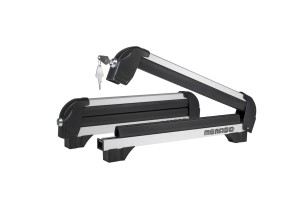
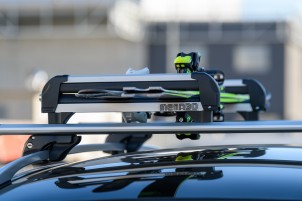

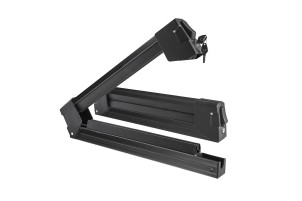
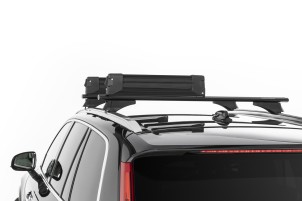
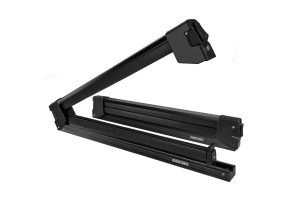
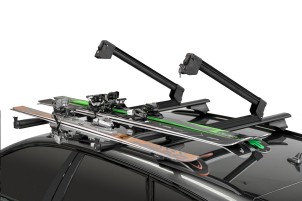
Why choose a ski carrier for roof bars?
Because it uses the roof bars you already have and does not require you to remove anything at the end of the day. Also known as a roof ski carrier or ski rack for roof bars, it is the choice for people who ski frequently, travel with four or more people and want their skis locked at every stop. It is also the ski carrier for panoramic glass or aluminium roofs, where a magnet will not adhere. If you do not have roof bars and only go skiing a few times a year, take a look instead at the magnetic ski carriers, which attach to the bodywork without tools and carry 2 or 3 pairs of skis.
4 or 6 pairs: which capacity?
One pair per skier: that is the calculation to make before choosing. With 4 pairs of skis or 2 snowboards, you cover a full car: this is the capacity of Iceberg, Yelo 4 NS and Yelo 4 NS Black, the version with a black finish. With 6 pairs of skis or 4 snowboards, move up to Yelo Black, for those carrying spare skis or the equipment of the whole group in a single car. The model-by-model comparison is available in the guide which ski carrier for roof bars to choose.
How is it attached to the roof bars?
With T-bolts that slide into the roof bar channel and lock the ski carrier onto the bar. This is the attachment system used by all four models. If your roof bars do not have a channel, or have a profile that is too wide, the carrier is mounted outside the channel, on top of the bar: the outside-channel kit for Iceberg covers profiles up to 80 mm wide, while the kit for the Yelo range covers up to 60 mm. Measure the width of the bar before ordering.
Sliding base: what is it for?
For loading and unloading skis without having to lean over the roof. On Yelo Black, the base slides towards the side of the car: pull the ski carrier towards you, open it, place the skis inside, close it and slide it back into position. The advantage is particularly noticeable on SUVs and taller cars, where the centre of the roof is out of reach, and when loading 6 pairs of skis every time you go skiing.
Aluminium ski carrier with lock: what difference does it make when travelling?
Mount it once and forget about it until spring. Aluminium is the material used throughout the range, chosen for an accessory that spends the winter outdoors; the standard anti-theft lock locks the ski carrier with the skis inside, so when stopping at a mountain refuge or ski-lift car park, you can get out without unloading them. The pre-departure check is quick: T-bolts tightened and lock closed. For the maximum permitted speed, refer to the manual for the specific model.
FAQ — Main category: ski carriers for roof bars
Which roof bars can the ski carrier be mounted on?
Roof bars with a T-slot, where the fixing bolts of all four models slide. Compatibility depends on the bar, not the car: what matters is the profile of the roof bar, not the make and model of the vehicle. If the roof bars do not have a channel, or have a profile that is too wide, an outside-channel kit can be added. If you do not have roof bars yet, first choose the ones suitable for your car using the vehicle selector, then choose the ski carrier.
The roof bars do not have a T-slot: can the ski carrier still be mounted?
Yes, with an outside-channel kit, which secures the ski carrier on top of the bar rather than inside the channel. There are two kits in the ski carrier accessories section: the Iceberg kit covers profiles up to 80 mm wide, while the Yelo kit covers profiles up to 60 mm and is the correct one for Yelo 4 NS, Yelo 4 NS Black and Yelo Black. Measure the width of the roof bar before ordering and compare it with the kit's maximum limit.
Does the ski carrier for roof bars also carry snowboards?
Yes, all four models. Iceberg, Yelo 4 NS and Yelo 4 NS Black carry 2 snowboards instead of 4 pairs of skis; Yelo Black carries up to 4 snowboards instead of 6 pairs of skis. The product page for each model shows both capacities, in pairs of skis and snowboards: start with the capacity you need when choosing.
Does the ski carrier also carry snowboards?
It depends on the model. Among the magnetic carriers, Aconcagua carries 2 snowboards and Shark carries 2 snowboards or 1 pair of skis and 1 snowboard; Himalaya and Igloo carry skis only. Among the ski carriers for roof bars, Iceberg, Yelo 4 NS and Yelo 4 NS Black carry 2 snowboards, while Yelo Black carries up to 4. Before choosing, check the snowboard capacity on the product page.
Can the ski carrier for roof bars be left mounted all season?
Yes. The ski carrier for roof bars is attached to the roof bars with T-bolts and secured with the lock: it can remain on the roof from the beginning to the end of the season, with the skis loaded and unloaded for every trip. This is the main difference compared with magnetic ski carriers, whose manuals state that they should not be left mounted for more than 36 consecutive hours. At the end of the season, remove the carrier from the roof bars and store it until the following winter.
Does it need to be mounted as a pair?
Yes, the ski carrier for roof bars consists of two units, one for each roof bar: the skis rest on both units and remain parallel to the direction of travel. The two units are secured with T-bolts to the front and rear roof bars, according to the distance between the bars on your car. Before setting off, check that both units are securely locked and that the locks are closed.

.png)