Roof Box or Ski Rack: Which Is Best for Carrying Skis?

Roof box or ski carrier: which is better for transporting skis by car?

Same ski holiday, two cars: in the first, the skis travel locked inside the roof box alongside the bags; in the second, four pairs sit on the ski carrier and the suitcases go in the boot. These are opposite choices, and both can make sense. A roof box is useful when skis travel with the luggage and its interior is longer than the skis; a ski carrier is better when you have several pairs or want to fit and remove it in minutes, even without roof bars.

There are three ways to transport skis by car: inside the cabin, in a roof box or on a ski carrier. The cabin is the only option that needs no accessories, but it usually costs you a rear seat. Four factors determine the choice between a roof box and a ski carrier: how many pairs you carry, how much luggage will not fit in the boot, whether you already have roof bars, and how often you fit the equipment each year. This guide compares all three options, covers what changes on the road—from speed limits to road salt on the skis—and finishes with recommendations for different situations. The linked guides cover roof-box dimensions and choosing a ski carrier.

Inside the car, roof box or ski carrier: what’s the difference?

Inside the car, skis take up seats and boot space. A roof box locks them away with the luggage, provided its interior is longer than the skis. A ski carrier is for skis and snowboards only: 2 to 6 pairs, depending on the model; the magnetic version does not need roof bars.

Here are the three options compared:

Inside the carRoof boxSki carrier
Number of skisas many as fit with the rear seats folded downdepends on internal length and width; no fixed pair count is stated2–3 pairs on magnetic carriers, 4–6 on roof-bar models
Luggageless room in the bootskis and bags togetherskis and snowboards only
Roof barsnot neededalways requirednot needed for magnetic models; required for the others
Seatsusually at least one seat is lostall seats remain availableall seats remain available
Snow and saltskis are protected, but water stays inside the carskis are enclosed and protected from saltskis are exposed to the elements

The cabin works when only a few passengers are travelling. With a full car, the real choice is usually between a roof box and a ski carrier, depending on what else needs to go on the roof with the skis.

When is it worth carrying skis in a roof box?

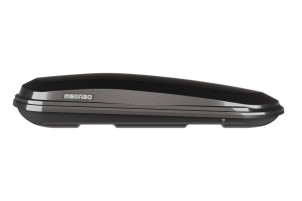
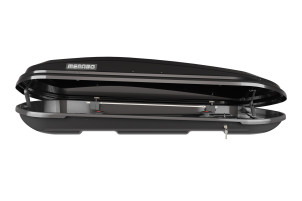
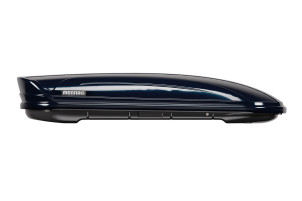
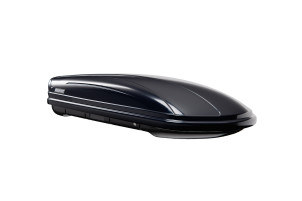
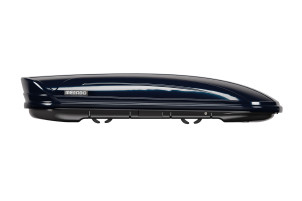
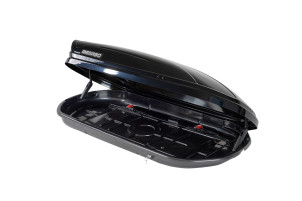
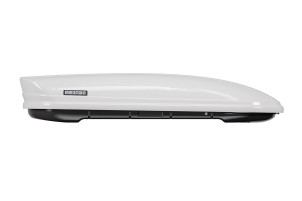
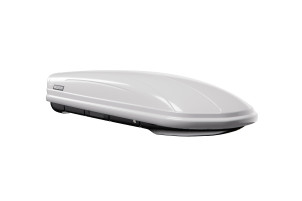
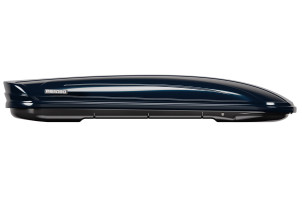
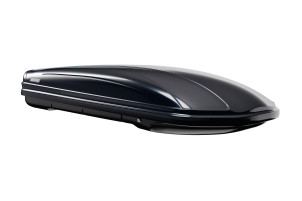
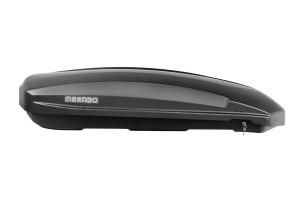
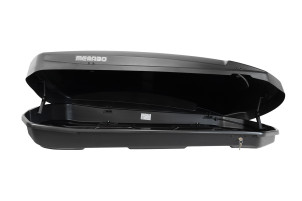
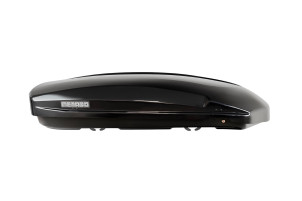
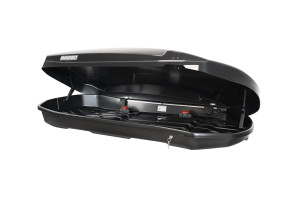
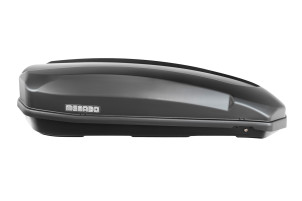
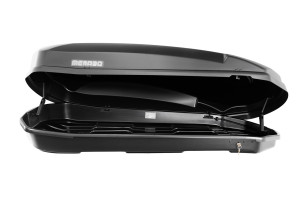
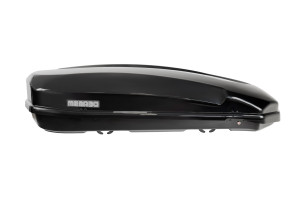
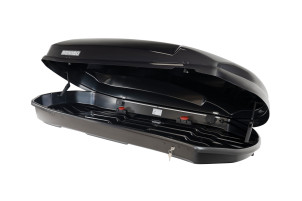
A roof box makes sense when skis travel with the luggage and you want everything locked away, dry and protected from road salt. There is one essential condition: the inside must be longer than your skis. With an internal length of less than 150 cm, a box is suitable for luggage only.

Inside a roof box, the skis travel enclosed alongside jackets and soft bags. The anti-theft lock, fitted to all Menabo roof boxes, protects them during stops too. It is the most convenient option for a family ski week, when suitcases and bags also need to go on the roof, and for people with long skis: the Mania 580 has an internal length of 217 cm.

When choosing a roof box for skis, start with their length. The internal dimensions of each model are listed in the guide how long should a roof box be?.

There are two limitations. A roof box always mounts on roof bars, and its unladen weight, 8 to 20 kg, counts towards the maximum roof load stated in the vehicle handbook, together with the bars and luggage. The box load capacity is 75 kg, or 50 kg for the Mania 320. The guide to permitted roof load explains the full calculation.

A roof box can also carry holiday suitcases in summer, whereas the ski carrier usually stays in the garage until winter.

When is a ski carrier better than a roof box?

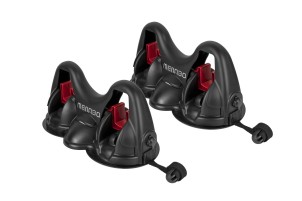
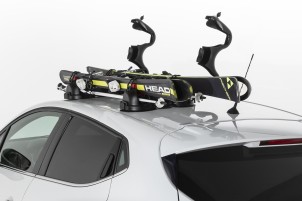
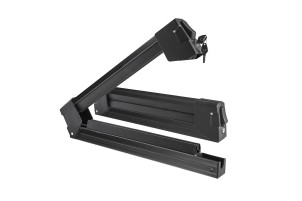
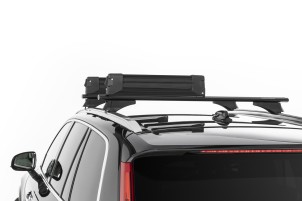
A ski carrier is best when skis are the main load and everything else fits in the boot. Magnetic models carry 2 or 3 pairs, sit on a steel roof without bars and can be fitted in minutes; models for roof bars carry up to 6 pairs and can stay fitted for the whole season.

Menabo’s car ski carriers fall into two groups.

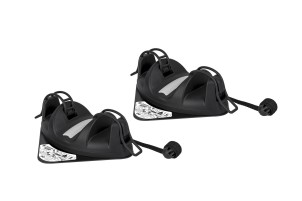
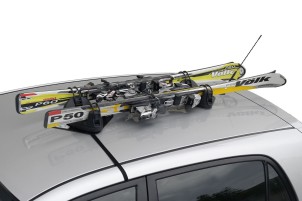
Magnetic carriers suit people who ski on a few weekends a year and do not have roof bars. They require a steel roof at least 125 cm long, clean and dry. Igloo and Himalaya each carry 2 pairs of skis; Himalaya can also carry 2 ski poles. They should be removed at the end of the day: the manuals say not to leave them fitted for more than 36 consecutive hours. Magnets will not attach to glass, panoramic or aluminium roofs.

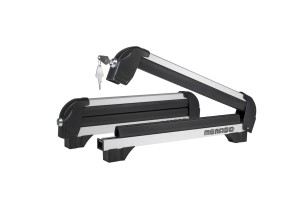
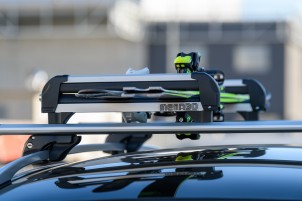
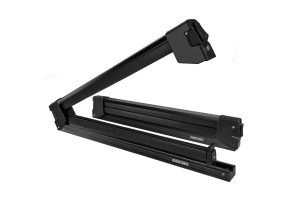
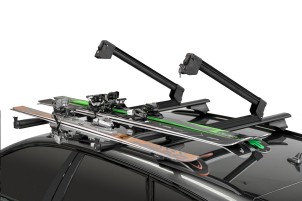
Roof-bar ski carriers attach with T-bolts in the bars’ channels; bars without a channel need a suitable adapter kit. An anti-theft lock is standard. These carriers hold more equipment: 4 pairs on Iceberg and Yelo 4 NS, and 6 pairs of skis or 4 snowboards on the Yelo Black, which has a sliding base. On the way home, wet skis stay outside, away from seats and bags.

The differences between the two systems and each model’s capacity are covered in the guide magnetic ski carrier or roof-bar ski carrier. A dedicated guide to roof-bar models helps you choose between Iceberg, Yelo 4 NS and Yelo Black.

How can you carry skis inside the car?

Skis can be placed between the boot and folded rear seats or passed through a ski hatch, as long as they cannot move around. Road rules require that luggage does not obstruct the driver’s view or restrict their movements. This is a suitable option when there are spare seats.

The rule is set out in Article 164 on securing loads: a load must be secured so it cannot fall, reduce the driver’s visibility, impede their movements or compromise the vehicle’s stability.

For practical advice, Sicurauto has a guide on transporting skis and snowboards safely in the car: do not place skis between the two front seats, where they can restrict the driver’s movements. If the rear seats are folded down, secure the skis so they cannot slide towards the driving position.

If the car has a ski hatch, the skis can pass through from the boot while the two outer rear seats remain available. A ski bag helps stop edges and snow damaging the trim and the rest of the luggage. The guide on what to take skiing explains how to use one.

What changes on the road with a roof box versus a ski carrier?

For skis, Menabo manuals specify the same 130 km/h limit for roof boxes and ski carriers. With snowboards, the limit for roof-bar ski carriers drops to 110 km/h. Other differences include road salt on the skis, cleaning the roof before fitting a magnetic carrier, and the time needed to fit and remove the equipment.

The 130 km/h limit with skis applies to Mania and Satellite roof boxes and to the Aconcagua, Himalaya, Igloo, Iceberg, Yelo 4 NS and Yelo Black ski carriers. For Diamond and Shark, follow the manual supplied in the package.

For snowboards, the manuals for roof-bar ski carriers specify 110 km/h, while the Aconcagua manual specifies 100 km/h. The roof-box limit remains 130 km/h, provided the board fits inside.

On a ski carrier, the skis are exposed to snow and road salt. After snowfall, sweep and dry the roof before fitting a magnetic carrier. Roof boxes and roof-bar carriers can stay fitted all week; a magnetic carrier should be removed after each outing. Roof-box manuals warn about crosswinds, and neither system should be taken through an automatic car wash. Both increase fuel consumption, especially at high speed; figures for roof boxes are in the guide to fuel consumption.

Roof box or ski carrier: which should you choose for the way you ski?

The choice depends on who is travelling and how you ski: how many pairs you carry, how much luggage will not fit in the boot, whether you already have roof bars, and how often you head to the snow each year. These are the most common scenarios:

  • Two people, two pairs of skis, bags in the boot and no roof bars: a magnetic carrier such as Igloo or Himalaya, if the roof is steel.
  • Two or three people, with skis and bags that will not all fit in the boot: a roof box longer than your skis, such as Mania 460, Satellite 550 or 600, Diamond 500 Duo or Mania 580.
  • A family renting equipment: no ski carrier needed; if the suitcases do not fit, a luggage roof box is enough, even a short one.
  • A family with four pairs of skis: a roof-bar carrier that holds all four pairs, such as Iceberg or Yelo 4 NS, with luggage in the boot; adding a roof box alongside is only possible under the conditions explained in the FAQs.
  • Someone who skis every weekend: a roof-bar carrier that can stay fitted for the season; without roof bars, a magnetic carrier that is removed at the end of the day.
  • Snowboards and motorway driving: a roof box, if the board fits, because the limit is 130 km/h; for a group, Yelo Black carries up to 4 boards at 110 km/h.

If you have chosen a roof box, start with the filters for Menabo roof boxes: only models with the selected features will remain. Then choose one whose internal length exceeds the length of your skis.

If everything except the skis fits in the boot, choose a ski carrier. If the bags will not fit either, choose a roof box.

FAQ

How many pairs of skis fit in a roof box?

It depends on the skis and the shape of the box: Menabo roof-box specifications do not state a number of pairs. First check the internal length, which must exceed the length of the skis, then the internal width, which ranges from 71 to 88 cm across the range. To estimate the space needed, arrange the pairs on the floor as you would place them in the box and measure the width they occupy, remembering that the box narrows towards the ends.

Can a roof box and a ski carrier be fitted to the same roof bars?

Yes, but only if the bars are long enough to accommodate them side by side and the weight remains within the limits. Measure the section of bar where the accessories attach: it must fit the external width of the box—77 to 94 cm for Menabo models—plus the width of the ski carrier. Check the roof-box instructions to confirm that it can be mounted offset to one side. The bars, roof box, ski carrier, skis and luggage must all remain within the maximum roof load stated in the vehicle handbook. Otherwise, fit only one accessory on the roof.

For snowboarding, is a roof box or ski carrier better?

It depends on how many boards you carry and how fast you drive. The Mania and Satellite roof-box manuals specify 130 km/h as the maximum speed with the box fitted, while the limit for snowboards on a roof-bar carrier drops to 110 km/h. The box must, however, be longer than the board and wide and tall enough to contain it. On ski carriers, Iceberg and Yelo 4 NS carry 2 snowboards, while Yelo Black carries 4.

Do skis get road salt on them when carried on a ski carrier?

Yes. On a ski carrier, skis travel exposed to the elements and can arrive wet from snow and salt spread on winter roads. The edges are steel and can rust in damp conditions, so it is best to dry them when you arrive. If you want the skis to arrive dry, choose a roof box, provided its interior is longer than the skis.

If I ski only a few times a year, is a roof box or ski carrier better?

It depends on whether you have roof bars and what you need in summer. If you already have roof bars and also travel with suitcases on holiday, a roof box is useful all year: for skis in winter and luggage in summer. If you have no roof bars and the roof is steel, a magnetic ski carrier holds 2 pairs, can be fitted in minutes and removed at the end of the day. The Igloo model does not require tools.

Related products

Comments (0)

No comments at this moment

Made in Italy Leisure Time Car Accessories

Menabo is the Italian brand appreciated for its distinctive design and superior quality. For over 50 years, we have been producing car accessories such as bike racks, ski racks, roof boxes and baskets, roof racks, and water sport solutions. Each of our products, made entirely in Italy, is certified according to the strictest safety standards. Innovation, safety and quality are our main goals, guaranteeing customers reliable and stylish accessories.

Menabo Quality and Safety

Every detail of Menabo's products is carefully considered, from design to production. Our accessories for pick-ups, commercial vehicles, 4x4, and garage organisation, as well as backpacks, bags and outdoor living solutions, reflect our commitment to quality. Made from selected materials and subjected to rigorous safety tests, Menabo products represent the excellence of Made in Italy for leisure and sport. 

download the catalog

customer care

Download our catalog to stay up-to-date on all new product releases.

Do you need help?

For faster assistance, please contact us by email at: customercare@flli-menabo.it, always including the batch number and part codes. The same information is required for phone support at +39 0522 1750280 (Hours: 8:15–12:15, 12:45–16:45).

download the catalog

Download our catalog to stay up-to-date on all new product releases.

customer care

Do you need help?

For faster assistance, please contact us by email at: customercare@flli-menabo.it, always including the batch number and part codes. The same information is required for phone support at +39 0522 1750280 (Hours: 8:15–12:15, 12:45–16:45).

Product added to wishlist